
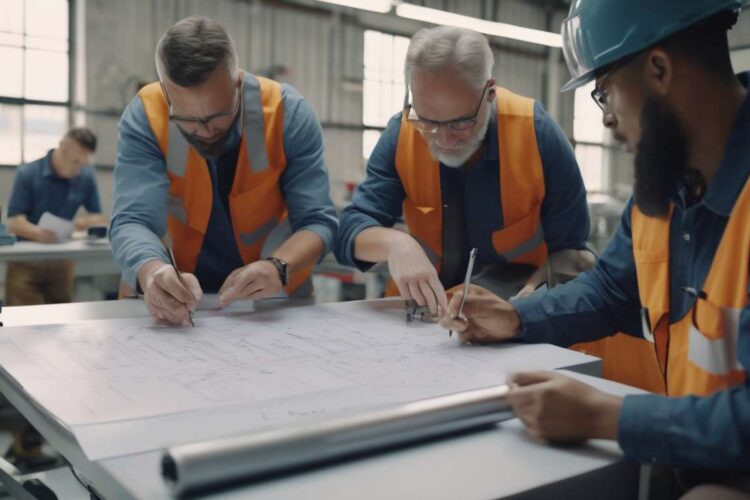
Knowing whether our teams meet production standards starts with one question: are our training programs built to reinforce the behaviors we expect on the floor?
Well-designed workplace training does more than transfer knowledge — it shapes consistent practice, reduces variability, and embeds quality into daily routines.
Targeted modules, hands-on coaching, and clear performance metrics align individual actions with organizational goals, resulting in fewer defects and smoother operations.
Questioning one-size-fits-all instruction lets us tailor curricula to diverse learning styles and shift patterns, ensuring every team member can meet standards reliably.
This article explores practical strategies for designing, delivering, and measuring training that sustains production standards, using real-world examples and actionable steps so production teams not only understand expectations but routinely exceed them.
Aligning Training with Standards
We align our training programs with industry and regulatory standards to ensure consistency, compliance, and measurable outcomes.
We design workplace training that reflects shared values and clear expectations so every team member feels included and capable.
By mapping curriculum to recognized benchmarks, we create a common language around performance and safety that strengthens belonging across shifts and roles.
We use structured skills assessment to verify competency, guide personalized learning paths, and celebrate progress together.
Our assessments are tied to observable tasks and documented criteria, so feedback stays objective and supportive.
We commit to continuous improvement by regularly reviewing training content, learner outcomes, and regulatory updates, then iterating with involvement from frontline staff.
Key continuous-improvement steps:
-
- Capture insights from facilitators and participants.
-
- Prioritize practical adjustments.
-
- Communicate changes transparently.
This process helps us maintain relevance, boost confidence, and reduce variability in production standards.
The result is a reliable framework where everyone knows expectations, contributes to quality, and grows within a trusted community.
Assessing Skill Gaps
We regularly identify where knowledge and performance fall short so we can target training, allocate resources, and track measurable improvement.
We use structured skills assessment tools — surveys, practical tests, and performance data — to map competencies against production standards.
By involving team members in assessment design, we build trust and ensure relevance; everyone feels seen and responsible for outcomes.
We prioritize transparency: results are shared with the group, with clear next steps and timelines.
This openness reinforces belonging and motivates participation in workplace training initiatives.
We combine quantitative metrics with qualitative feedback to get a rounded view of gaps.
- Quantitative metrics: error rates, time-to-complete.
- Qualitative feedback: peer observations, self-reflection.
We set short-term milestones tied to continuous improvement so progress is visible and celebrated.
- Frame gaps as opportunities for growth rather than labeling people.
- Ensure the whole team owns development to keep morale high.
- Focus training interventions on real needs so they’re efficient and respectful.
Designing Targeted Modules
We design concise, role-specific learning modules that target identified gaps and deliver measurable improvement.
Each module is mapped to outcomes from our skills assessment so every team member can see how the content connects to their daily tasks and career growth.
Modules are short, practical, and inclusive.
- We use examples that reflect our diverse shop floor.
- We encourage contributors to share insights and real-world tips.
Lessons are sequenced to build confidence quickly, with clear checkpoints and simple metrics tied to production standards.
We prioritize relevance over volume.
- Each activity is directly linked to a standard or procedure.
- Each assessment feeds back into continuous improvement cycles.
We create mixed-media resources to accommodate different learning styles and set transparent expectations so learners know goals and success criteria.
We involve team representatives in module review to foster ownership.
We schedule regular reviews of module effectiveness based on workplace training outcomes and updated skills assessment data.
Hands-On Coaching Methods
We pair learners with experienced coaches for short, focused practice sessions that use real equipment and immediate feedback to build competency.
We create small groups so everyone feels seen and supported, and we rotate roles so every team member practices hands-on tasks and observes peers.
Each session is tied to clear workplace training goals and includes a brief skills assessment so coaches know which techniques to reinforce and which to reteach.
Coaching approach:
- Encourage coaches to use guided questioning.
- Demonstrate steps, then step back while offering corrective cues.
- Make time for group reflection after practice, inviting members to share what helped and what felt challenging.
Follow-up and continuous improvement:
- Prioritize consistent follow-up and incremental skill checks aligned with continuous improvement.
- Celebrate small gains.
- Adjust coaching tactics when needed.
Principles for sessions:
- Keep sessions practical, respectful, and inclusive.
- Avoid creating pressure—make development a shared, ongoing part of work culture.
Outcome: Strengthened competence and cohesion across the production team.
Measuring Performance Metrics
We’ll track a few clear, job-relevant metrics—like task accuracy, time-to-competency, and error rates—to measure how coaching improves on-the-job performance.
We’ll collect baseline data, set shared targets, and report progress in ways everyone can understand.
Our approach ties workplace training directly to day-to-day outcomes so people feel their efforts matter and belong to a team that learns together.
We’ll use regular skills assessment check-ins to spot gaps and validate improvements, combining quantitative scores with short structured observations.
We’ll keep metrics simple, transparent, and aligned with production standards so feedback is actionable and nonjudgmental.
When a trend shows a problem, we’ll convene the team, review root causes, and apply small-cycle changes as part of continuous improvement.
We’ll celebrate gains and adjust targets as competence grows, ensuring measurement supports development rather than penalizes mistakes.
That keeps morale high and reinforces a shared commitment to doing excellent work.
Adapting to Learning Styles
We tailor instruction and coaching methods to different learning preferences—visual, auditory, kinesthetic, and social—so everyone can grasp new tasks efficiently.
We create small, inclusive cohorts where people feel seen and supported.
- We mix short visual guides, clear verbal briefings, hands-on demonstrations, and peer practice sessions.
- During workplace training, we pair these methods with straightforward skills assessment to identify who needs more modeling, who benefits from diagrams, and who learns best by doing alongside a colleague.
We rotate facilitators so no single style dominates and we encourage learners to share which approaches help them most.
- We set achievable practice milestones and offer timely feedback.
- We make adjustments together when gaps appear.
By valuing diverse ways of learning and measuring progress precisely, we strengthen team cohesion and competence.
We keep one eye on continuous improvement, ensuring our instructional mix evolves as the team’s needs and production standards change.
Embedding Continuous Improvement
We embed ongoing feedback loops and regular small experiments into our routines so teams can quickly test, learn from, and scale better ways of working.
We prioritize practical workplace training that ties directly to daily tasks and team goals, and we invite everyone to contribute observations and ideas.
We use short cycles of implementation and reflection, pairing frontline insight with targeted skills assessment to spot gaps and opportunities.
We make continuous improvement a shared responsibility:
- Leaders remove barriers.
- Peers mentor.
- Learners own progress.
Our metrics focus on meaningful changes — not vanity scores:
- Reduced errors.
- Faster handoffs.
- Clearer standards.
Regular skills assessment feeds our feedback loops, ensuring training stays relevant and accessible.
We celebrate incremental wins and document learnings so the community sees progress and feels valued.
By keeping experiments small, transparent, and linked to real work, we strengthen belonging, boost competence, and create a culture where continuous improvement is practical, visible, and owned by the whole team.
Scaling and Sustaining Programs
To scale and sustain our programs, we prioritize systems that make successful practices repeatable, resourced, and easy for teams to adopt over time.
We build a shared playbook for workplace training that documents routines, checkpoints, and desired outcomes so every team member feels included and clear about expectations.
We use regular skills assessment cycles to identify gaps and target coaching, and we make results visible without judgment so people can contribute to solutions.
We commit budget and time to trainers, peer mentors, and scalable digital tools so effective methods don’t disappear when projects shift.
We set simple metrics tied to team well-being and production standards, and we tie continuous improvement efforts to those metrics so iterations are purposeful.
We encourage cross-team forums where successes and setbacks are shared, so learning spreads organically.
By designing for consistency, feedback, and belonging, we ensure our programs remain practical, equitable, and resilient as we grow.
How much will implementing a comprehensive workplace training program typically cost for a production team, including hidden or recurring expenses?
We’re asking how much a comprehensive training program typically costs for a production team.
Typical upfront budget: $5k–$50k depending on scope.
Typical recurring costs: $1k–$10k per year for updates, software licenses, trainer time, and assessments.
Hidden expenses to consider:
- Downtime
- Refresher sessions
- Onboarding new hires
Factors that refine estimates:
- Scale (number of trainees and locations).
- Customization (tailoring content to processes and tools).
- Compliance needs (industry regulations and certification).
Goal: Factor these elements so the investment feels fair and sustainable for everyone.
What legal or regulatory considerations (e.g., labor laws, safety regulations, certification requirements) should be addressed when developing and delivering training?
Legal and regulatory considerations include complying with labor laws (hours, breaks, overtime), meeting OSHA or local safety standards, ensuring required certifications and credential renewals, honoring anti-discrimination and accessibility rules, and documenting training for audits.
Record-keeping and data privacy must be maintained to meet audit requirements and protect employee information.
Union and collective bargaining requirements should be identified and respected where applicable.
Ongoing compliance strategy: consult legal counsel and regulators regularly so the program stays compliant, up-to-date, and inclusive for everyone.
How can companies measure the return on investment (ROI) of training programs in financial terms, and what timeline is realistic for seeing measurable business impact?
We can quantify training ROI by tracking pre/post performance, productivity gains, error and rework reductions, and turnover or absenteeism changes, converting those improvements into cost savings and revenue gains.
We’ll factor training costs, time-to-competency, and ongoing support.
Expected timeframes for measurable impact:
- Skill-based programs: 3–6 months.
- Cultural or leadership initiatives: 6–12+ months.
We’ll review regularly to refine assumptions and celebrate progress.
Conclusion
You’ve aligned training with standards, assessed skill gaps, and designed targeted modules that close those gaps.
You’ve used hands-on coaching, measured performance, and adapted to learners’ styles so improvements stick.
You’ll embed continuous improvement and scale programs thoughtfully, sustaining gains over time.
Keep tracking metrics, updating content, and supporting coaches so your team meets production standards consistently, raises quality, and stays agile as demands change.